Why Sicily Is an Extraordinary Wedding Destination
Sicily is the largest island in the Mediterranean, and it feels like a world unto itself — a place where Greek temples stand alongside baroque churches, where volcanic landscapes meet crystalline waters, and where the traditions of hospitality run deeper than almost anywhere in Europe. As a wedding destination, Sicily offers a combination of drama, authenticity, and value that is increasingly difficult to find elsewhere in Italy.
The island's destination wedding market has grown significantly in recent years, with an estimated 2,500+ international weddings annually. Couples are drawn by the diversity of settings — from the dramatic slopes of Mount Etna and the ancient ruins of Taormina to the baroque splendour of Noto and Syracuse in the southeast, the rugged western coastline near Trapani and Marsala, and the glamorous resort town of Cefalù on the northern Tyrrhenian coast. This variety means no two Sicilian weddings look or feel the same.
Sicilian cuisine is world-renowned — fresh seafood, arancini, cannoli, pasta alla Norma, and wines from Etna's volcanic slopes — and the island's wedding feasts are legendary in their abundance and quality. The wedding season spans May to October, with the shoulder months offering excellent weather, lower prices, and a more relaxed atmosphere than the scorching July-August peak.
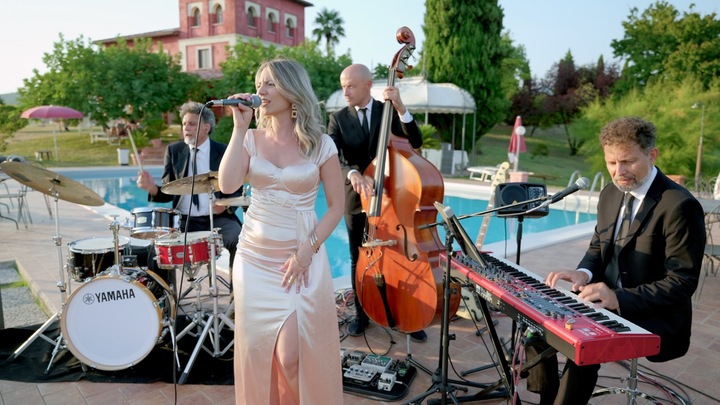
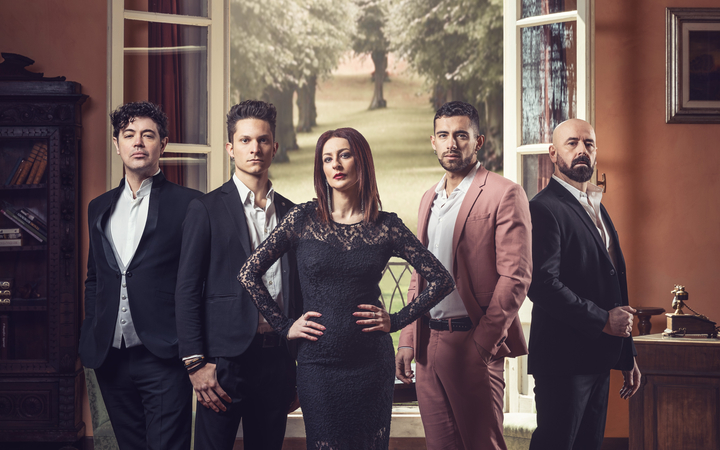
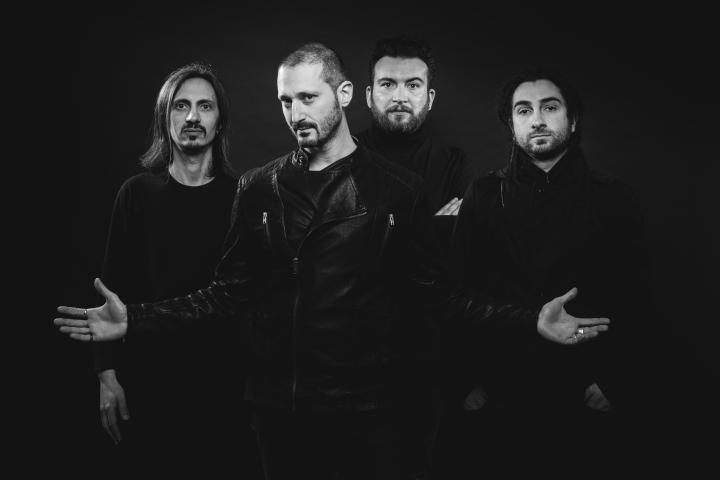
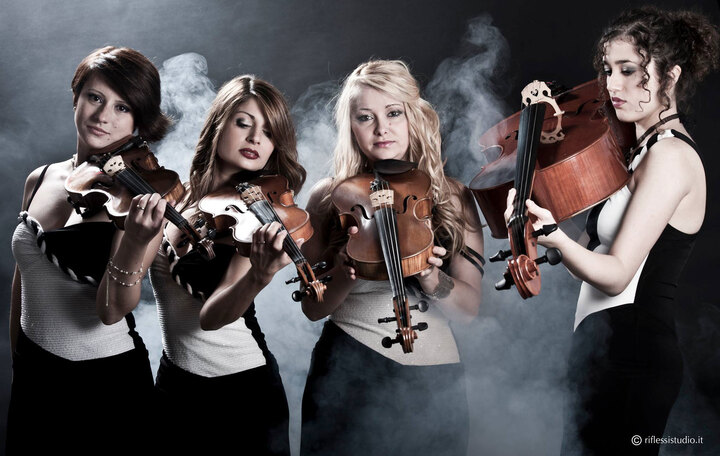
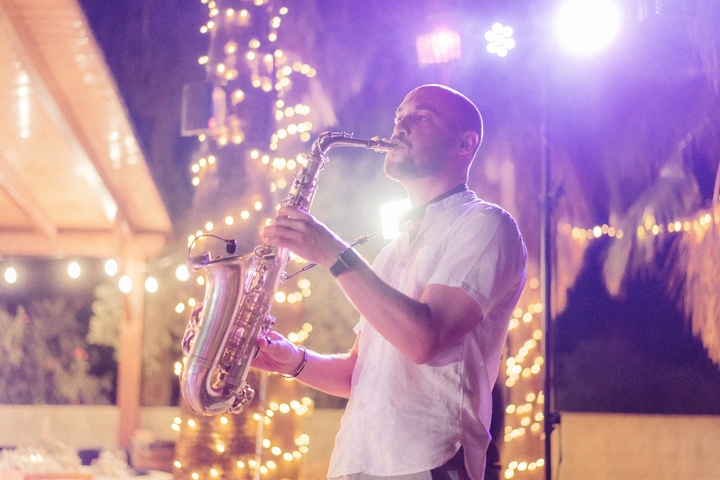
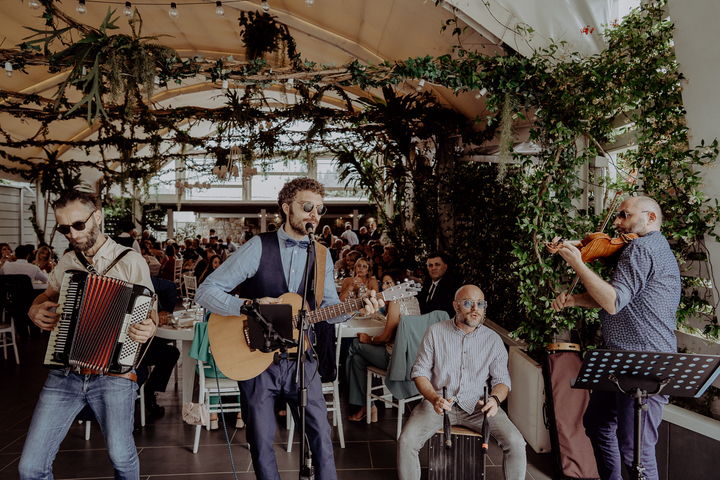
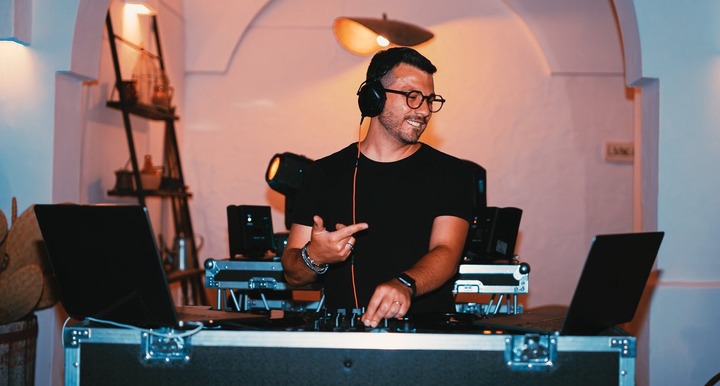
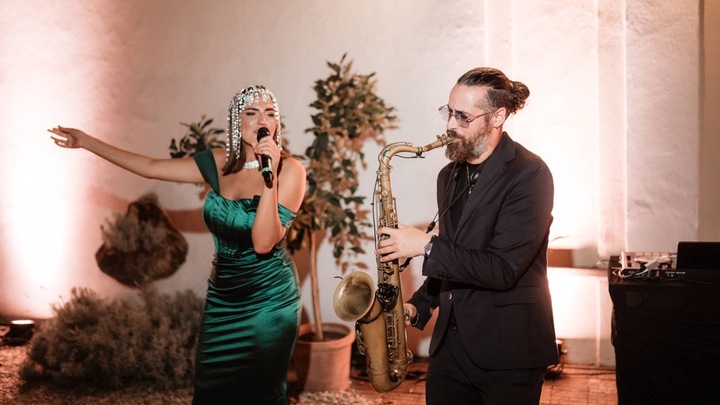
Music is inseparable from Sicilian identity. The island's folk traditions draw on centuries of Greek, Arab, Norman, and Spanish influence, producing a rich tapestry of sounds that no other region in Italy can match. The right wedding band taps into this energy while delivering the contemporary entertainment your guests expect — and when those two elements come together on a warm Sicilian evening, the result is extraordinary.
Popular Venues & Settings for Sicilian Weddings
Taormina & the Ionian Coast
Taormina, perched on a hillside above the Ionian Sea with Mount Etna as its backdrop, is Sicily's most famous wedding destination. The town offers luxury hotel terraces, restored palazzi, and the legendary Greek Theatre (available for private events with special permits). The nearby coastline — Isola Bella, Giardini Naxos — provides beach and waterfront alternatives.
Band considerations: Taormina venues are typically terraced, with performance spaces on different levels connected by steps. Bands should plan for compact setups and potentially awkward load-in routes through narrow medieval streets. Sound travels unpredictably on hillside terraces — a good sound engineer who can adjust for the slope and open aspect is essential. Hotel and town venues in Taormina tend to enforce strict curfews (10:30pm-11pm), which can limit the party — confirm timing constraints early and plan your entertainment schedule accordingly.
Baroque Southeast: Noto, Syracuse & Ragusa
The Val di Noto — a UNESCO-listed collection of baroque towns rebuilt after the 1693 earthquake — has become Sicily's hottest wedding region. Noto's honey-coloured limestone buildings, Syracuse's ancient Ortigia island, and Ragusa Ibla's cascading hilltop architecture provide some of the most photogenic settings in all of Italy. Wedding venues include restored baroque palazzi, monastery courtyards, and countryside estates (baglio or masseria properties) among carob and almond groves.
Band considerations: Courtyard venues in these baroque towns share similar acoustic characteristics — hard limestone walls create bright, reflective sound that amplifies quickly. Bands need to manage volume from the outset, and a compact PA system is preferable to oversized rigs. The countryside estates around Noto and Modica offer more freedom — open-air settings with fewer acoustic challenges and typically more relaxed curfews. For urban venues, expect noise restrictions from 11pm and plan the band's high-energy set accordingly.
Mount Etna & Wine Estate Venues
Weddings on the slopes of Europe's most active volcano offer something no other destination can match. Etna's wine estates — producing internationally acclaimed wines from indigenous Nerello Mascalese and Carricante grapes — provide dramatic settings with vineyard terraces overlooking the eastern coastline, lava-stone buildings, and a sense of raw natural power.
Band considerations: Altitude matters on Etna — venues at 600-900 metres above sea level are noticeably cooler than the coast, which is comfortable for guests and musicians alike, but evening temperatures can drop surprisingly low in May or October. Wind is common on exposed terraces, affecting microphones and lighter equipment. Power infrastructure at wine estates varies widely; confirm electrical capacity and consider a generator. The volcanic soil and terrain can make outdoor staging uneven — risers or a portable stage platform help ensure a stable, professional setup.
Western Sicily: Trapani, Marsala & the Egadi Islands
Western Sicily offers a quieter, more authentic alternative to the east coast. Historic salt pans, windmills against sunset skies, and the offshore Egadi Islands create distinctive settings. Venues include converted baglio farmhouses, seaside restaurants, and boutique hotels in the medieval centre of Erice, perched 750 metres above Trapani.
Band considerations: Western Sicily is less developed for destination weddings, which means fewer venue-based restrictions but also less established infrastructure. Bands may need to be more self-sufficient, bringing their own PA, lighting, and staging. Travel from Palermo or Catania adds to band costs. The compensation is beautiful, intimate settings with flexible timing and genuinely warm local hospitality. Ferry logistics apply for Egadi Island venues — equipment transport requires advance planning.
Palermo & Northern Coast
Sicily's capital Palermo offers a raw, vibrant, and culturally rich wedding setting. Arab-Norman architecture (UNESCO-listed), street markets, baroque oratories, and restored aristocratic palazzi provide opulent venues. Along the northern coast, Cefalù offers a more resort-style atmosphere with beach venues and cliff-top hotels.
Band considerations: Palermo's historic venues range from vast (the Palazzo dei Normanni's courtyards) to intimate (tiny baroque oratories). Acoustics vary enormously — survey the space before finalising your band's setup plan. Urban Palermo has typical city noise regulations with curfews generally at 11pm. Cefalù and coastal venues may offer slightly more flexibility, particularly those outside the town centre. Parking and load-in in Palermo's chaotic old centre require patience and precise coordination.