Wedding Bands in Umbria

Live music for unforgettable Umbrian celebrations

1133 verified acts available in Umbria

Why Umbria Is Italy's Best-Kept Wedding Secret

Umbria — Italy's green heart — sits quietly at the centre of the peninsula, often overshadowed by its flashier neighbour Tuscany. But couples who discover this landlocked region find something that the more famous destinations struggle to offer: an experience that feels genuinely intimate, unhurried, and authentically Italian without the crowds, the mark-ups, or the sense of a well-worn tourist trail.

Known as il cuore verde d'Italia (the green heart of Italy), Umbria is characterised by lush, rolling hills, dense forests, medieval hilltop towns, and a remarkably preserved agricultural landscape that feels almost frozen in time. The region attracts around 1,500 destination weddings annually — enough to sustain a professional wedding industry but few enough that each celebration still feels special rather than one of a hundred that weekend.

Umbria's towns read like a love letter to medieval and Renaissance Italy: Perugia, the lively university capital with Etruscan roots; Assisi, the spiritual home of St. Francis; Orvieto, perched on a volcanic plateau above the most spectacular cathedral façade in Italy; Spoleto, home to the world-famous Festival dei Due Mondi; Todi, repeatedly named one of the most liveable small towns in the world; and Montefalco, the "balcony of Umbria," overlooking the Sagrantino wine valleys.

The food and wine are exceptional — Umbria is famous for black truffles, lentils from Castelluccio, porchetta, strangozzi pasta, and the powerful Sagrantino di Montefalco wine. Wedding feasts here are hearty, generous, and grounded in centuries of tradition.

Live music in Umbria benefits from the region's manageable scale and peaceful surroundings. Without the noise of coastal tourism or major city bustle, sound carries beautifully through Umbrian valleys — a band playing on a castle terrace at sunset, with nothing but green hills in every direction, is an experience of singular beauty.

Popular Venues & Settings for Umbrian Weddings

Restored Castles & Fortresses

Umbria is dotted with medieval castles and fortified estates, many of which have been meticulously restored as wedding venues. These range from imposing hilltop fortresses with panoramic towers to intimate family-owned castelli with walled gardens and ancient chapels. Areas around Todi, Trevi, and the Tiber Valley are particularly rich in castle venues.

Band considerations: Castle venues offer dramatic settings but come with acoustic complexity. Thick stone walls, high ceilings, and hard floors create reverberant interiors where sound builds quickly. Bands need to exercise volume control from the start, and a sound engineer familiar with historic stone buildings is invaluable. Many castles have multiple spaces — a chapel for the ceremony, a courtyard for aperitivo, a great hall or terrace for the reception — meaning bands may need to set up in more than one location or move equipment between spaces. Discuss the timeline and transition requirements in detail.

Umbrian Country Houses & Agriturismi

The agriturismo — a working farm or country estate offering hospitality — is quintessentially Umbrian. These venues range from modest farmhouses with gardens to luxury restored estates with pools, olive groves, and dedicated event spaces. Many are family-run, offering a warmth and personal touch that larger venues can't match.

Band considerations: Agriturismi are typically rural and surrounded by agricultural land, which means neighbours are distant and noise is rarely an issue. Music can often continue past midnight without restriction. However, infrastructure can be basic — power supply, staging, and lighting may all require supplementing. A generator is frequently needed, and bands should bring their own PA and not rely on venue equipment. The intimate scale of many agriturismi means a quartet or 5-piece band is ideal; larger acts may overwhelm the space both sonically and physically.

Assisi & Spiritual Venues

Assisi draws couples seeking a wedding with spiritual depth. The Basilica of St. Francis is available for Catholic ceremonies (with significant advance planning), but the town and surrounding countryside also offer secular venues — restored convents, monastery gardens, and hilltop estates with views across the Vale of Spoleto. Bevagna, Spello, and Montefalco provide equally beautiful alternatives nearby with fewer restrictions.

Band considerations: Religious venues in Assisi have strict rules about music — the Basilica and most churches require sacred music only, performed by approved musicians. For the reception, however, couples have full creative freedom. Assisi-area venues tend to be compact, and the town's narrow streets present load-in challenges for bands with large equipment. Plan the route from parking to performance area carefully, and allow extra time for setup. The spiritual atmosphere of Assisi lends itself to more refined musical choices — string ensembles, jazz, and sophisticated acoustic acts suit the tone particularly well.

Spoleto, Norcia & the Valnerina

The southern reaches of Umbria — Spoleto, Norcia, and the dramatic Valnerina gorge — offer rugged beauty and a wilder character than the more manicured north. Spoleto's cultural pedigree (the Festival dei Due Mondi has brought world-class performers here since 1958) extends to its wedding scene, with venues including the Rocca Albornoziana fortress and elegant palazzo spaces. Rural estates in the Valnerina valley sit among forested mountains and rushing rivers.

Band considerations: The Spoleto area is culturally sophisticated and audiences here appreciate quality musicianship. Festival dei Due Mondi has created a local tradition of excellence in performing arts, which elevates expectations. The Valnerina's mountain terrain means some venues are genuinely remote — confirm vehicle access, power availability, and mobile phone signal (important for band coordination on the day). The altitude means cooler evenings than much of central Italy, which is pleasant for musicians and guests but warrants warmer clothing after sunset.

Orvieto & Lake Corbara

Orvieto's dramatic hilltop position, its stunning Duomo, and the surrounding countryside of vineyards and olive groves make it an increasingly popular wedding destination. Nearby Lake Corbara adds a waterfront option that Umbria otherwise lacks. Venue options include palazzo courtyards in Orvieto's old town, countryside estates along the Orvieto-Todi corridor, and lakeside properties.

Band considerations: Orvieto's old town sits on a volcanic plateau accessed by funicular or a winding road. Getting band equipment into the historic centre requires careful planning — vehicle access is restricted in many areas, and timing the load-in to avoid tourist hours is wise. Once set up, however, the elevated setting provides natural sound projection over the surrounding valley. Countryside venues between Orvieto and Todi are far more straightforward logistically and offer the flexibility of rural Umbria with easy motorway access (the A1 is nearby).
Read the full Umbria wedding guide

Music & Entertainment for Umbrian Weddings

Umbrian weddings have a character distinct from the exuberant celebrations of the south or the polished glamour of Lake Como. They tend to be warm, intimate, and elegant, with entertainment that matches:

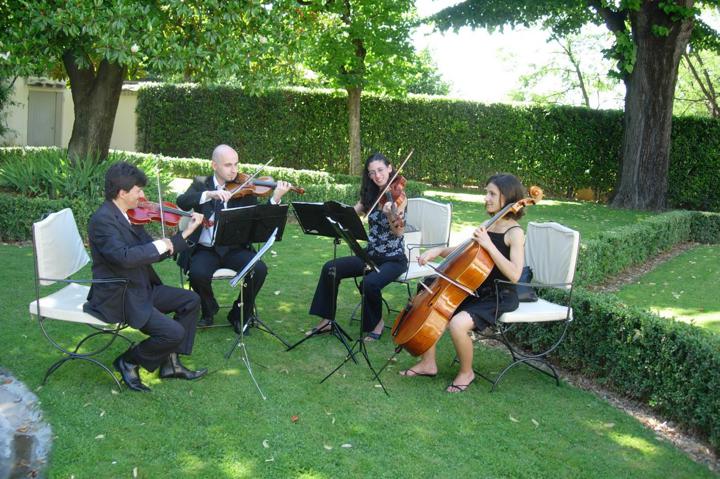
  • Ceremony music: Umbria's medieval chapels and churches have extraordinary acoustics for acoustic music. A solo cellist, string trio, or classical vocalist can fill these spaces with breathtaking sound without any amplification. For outdoor civil ceremonies — on a castle terrace or in a garden — a guitarist, harpist, or small ensemble adds grace to the setting.

  • Aperitivo: The Umbrian aperitivo is unhurried and generous, featuring local cured meats, truffled bruschetta, and Sagrantino wine. A jazz trio, bossa nova duo, or acoustic singer-songwriter creates an atmosphere of sophisticated relaxation. This is a moment for guests to absorb the landscape while enjoying refined background music.

  • Dinner music: Umbrian wedding dinners tend to be long, multi-course affairs celebrating the region's culinary traditions. Background music — a solo pianist, a duo, or a gentle jazz combo — maintains the atmosphere without competing with conversation. Some couples opt for a short musical interlude between courses: a singer performing a personally meaningful song, or a surprise performance.

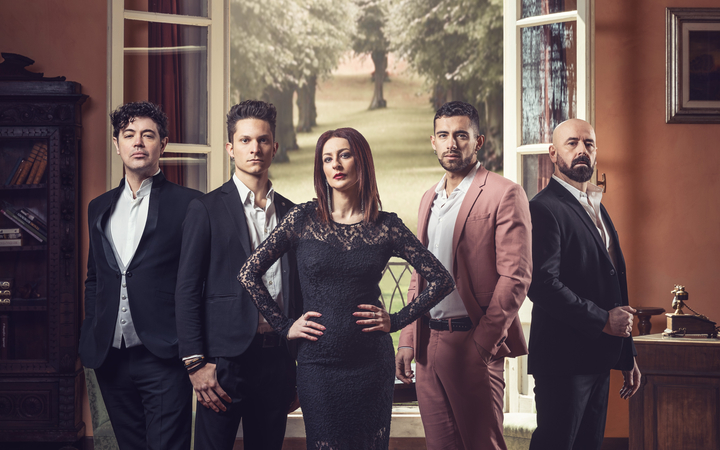
  • Party & dancing: When the dance floor opens, Umbrian weddings shift into higher gear while retaining their elegance. A 4-6 piece party band is perfectly scaled for most Umbrian venues. The repertoire typically leans toward a sophisticated mix: classic soul, Motown, jazz-funk, contemporary pop, and Italian classics. The atmosphere is more refined cocktail party than nightclub — though the energy can build impressively as the evening progresses and the Sagrantino flows.

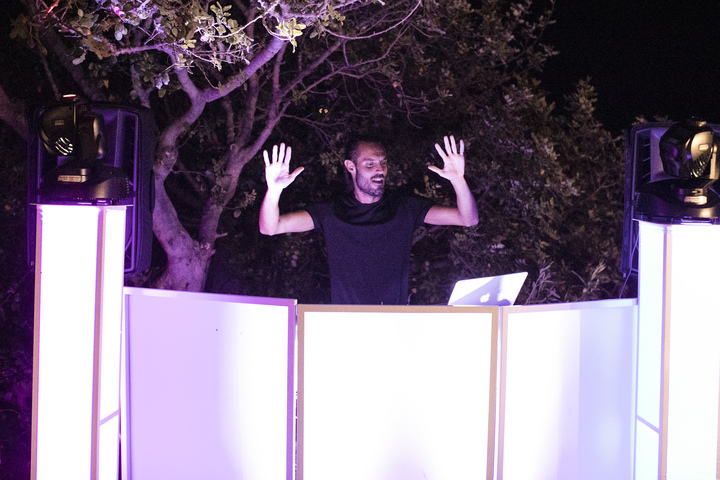
  • Late night: A DJ set from 11pm or midnight provides a seamless transition from band to late-night dancing, and many rural Umbrian venues allow music well into the small hours.

Logistics & Planning

Getting Your Band to Umbria

Umbria has its own small airport — Perugia San Francesco d'Assisi (PEG) — with limited connections (Ryanair serves London Stansted and a few seasonal routes). Most couples and bands access Umbria via Rome Fiumicino (FCO), which is 1.5-2 hours south by car, or Florence (FLR), roughly 2 hours north. Perugia is also well connected by rail, sitting on the Rome-Florence line.

Most bands working in Umbria are based in Rome, with some excellent local musicians based in Perugia and the wider region. Rome-based bands consider Umbria part of their regular territory — travel costs are modest (1.5-2 hours by road) and many know the venues well. Florentine bands also work in Umbria comfortably. The region's central position means it's accessible from most of Italy without extreme travel costs.

Setup & Equipment Considerations

  • Power: Rural Umbrian venues — particularly agriturismi and smaller castle properties — often have limited electrical capacity. Confirm available amperage and discuss the band's power needs early. A dedicated 32A supply is needed for a full band; a generator (€200-€400 to hire) is a common backup solution.
  • Load-in: Hilltop towns (Orvieto, Todi, Assisi) present access challenges in their historic centres. Country venues are generally easier, with vehicle access to the performance area. Provide detailed instructions and photos.
  • Weather: Umbria's summer weather is warm and mostly dry, but the inland location means sudden afternoon thunderstorms are possible, particularly in June. An indoor backup or covered performance area is essential for outdoor events. Temperatures are typically 2-3°C cooler than Rome, making outdoor evening performances very comfortable.
  • Sound curfew: Rural Umbria is very relaxed about noise — many countryside venues have no formal curfew, and music past midnight is common. Urban venues in Perugia, Spoleto, and Orvieto generally require music to stop by 11pm-midnight. Confirm with your specific venue.

Typical Wedding Day Timeline

| Time | Activity | Music | |------|----------|-------| | 16:00 | Ceremony | String trio / solo cellist | | 17:00 | Aperitivo | Jazz trio / acoustic duo | | 19:30 | Dinner | Background piano or ensemble | | 21:30 | First dance & party | Full band | | 23:30 | DJ set | Band DJ or separate DJ | | 01:00+ | Music ends | — |

SIAE & Music Licensing in Umbria

All live music at weddings in Umbria requires a SIAE licence. The process is identical to the rest of Italy: a borderò (setlist declaration) is submitted to the local SIAE office before the event, and a fee of €80–€300 is charged based on guest numbers and event type.

Umbria's SIAE offices are located in Perugia and Terni, with additional satellite points in smaller towns. Your wedding planner, venue, or band will typically handle this paperwork. For self-planned weddings, confirm responsibility for the SIAE submission — it's a simple but mandatory step. Italian bands consider it routine.

Local Wedding Music Traditions in Umbria

Umbria's wedding traditions reflect its character — they're understated, rooted in rural life, and touched by the region's deep spiritual heritage:

  • Processional music: In Umbrian towns, the tradition of a wedding procession from the town square to the church, accompanied by musicians, still survives. A small ensemble — perhaps accordion, clarinet, and drum — leads the bridal party through the streets while townspeople look on and offer congratulations. It's a beautiful custom that some destination couples adapt for their own celebrations.

  • Folk music traditions: Umbrian folk music has its own distinct character, different from both Tuscan and southern Italian traditions. Instruments like the organetto (diatonic accordion), tamburo (frame drum), and zampogna (bagpipe — used in pastoral Christmas traditions) appear at traditional celebrations. While full folk music sets are uncommon at modern weddings, incorporating one or two traditional Umbrian melodies adds authentic local flavour.

  • La serenata: As in many Italian regions, the groom's serenade to the bride the evening before the wedding is practised in Umbria. The musical accompaniment is typically modest — guitar and voice — and the mood is tender rather than theatrical. In smaller Umbrian towns, this tradition can draw the whole neighbourhood to watch.

  • Harvest and festival music: Umbria's agricultural calendar shapes its celebratory traditions. The Calendimaggio festival in Assisi (a medieval spring festival) and the grape harvest celebrations feature traditional music and dancing. Couples marrying during these periods can draw on the festive atmosphere, and musicians familiar with these traditions can incorporate related melodies into the wedding entertainment.

Budget Guide for Wedding Bands in Umbria

Umbria offers genuinely good value for money compared to Tuscany, the Amalfi Coast, and Lake Como. Entertainment costs reflect the region's lower overall price point without any compromise in quality:

| Band Type | Typical Price Range | Notes | |-----------|-------------------|-------| | Solo musician (ceremony) | €350–€650 | Guitarist, cellist, or vocalist | | Duo (acoustic/jazz) | €900–€1,700 | Ideal for ceremony + aperitivo | | Trio or quartet | €1,400–€2,500 | Ceremony through dinner | | Full party band (4-6 pcs) | €2,500–€5,000 | Reception and dancing | | Premium showband (7+ pcs) | €5,000–€8,000+ | Full entertainment package | | DJ (standalone) | €500–€1,000 | Evening set only | | Band + DJ package | €3,000–€6,000 | Most popular option |

Additional costs to budget for:

  • Travel and accommodation for Rome-based bands: €200–€500
  • Generator hire (if needed): €200–€400
  • Stage and lighting rental: €400–€1,200
  • SIAE licence fee: €80–€300

The savings compared to Tuscany can be significant — 15-25% less for equivalent quality. Peak season (June and September) commands the highest prices, but the differential is less dramatic than in more saturated markets. Mid-week weddings can yield 10-20% savings. Book 6-9 months in advance for summer dates; the best bands are less fiercely contested than in Tuscany but still fill their calendars.

Frequently Asked Questions

How does Umbria compare to Tuscany for a wedding?

Umbria offers a similar aesthetic — rolling green hills, medieval towns, excellent food and wine — at a lower price point and with fewer crowds. The trade-offs: Umbria has no coastline, fewer international flights, and a less established (though rapidly growing) destination wedding infrastructure. For couples who prioritise authenticity, intimacy, and value over name recognition, Umbria is often the better choice. Many wedding photographers and planners privately consider Umbria their favourite region to work in.

Are there English-speaking bands available in Umbria?

Most professional Italian wedding bands working the destination circuit have strong English-language skills and repertoires dominated by English-language songs (alongside Italian classics). Perugia's large university and international community mean the local music scene is cosmopolitan. If you specifically want a band with native English speakers, Rome-based bands (many of which include international musicians) are a short trip away.

What's the weather like for outdoor weddings in Umbria?

Umbria enjoys warm, mostly dry summers with temperatures of 28-34°C from June to August. The inland location means it's slightly cooler than Rome and significantly cooler than southern Italy. Evenings are pleasant — typically dropping to 18-22°C — ideal for outdoor dining and dancing. Rain is uncommon in July-August but possible in June and September, particularly as brief afternoon thunderstorms. An indoor contingency plan is always recommended.

Can we have a wedding in Assisi without a religious ceremony?

Absolutely. While Assisi is synonymous with St. Francis and its religious heritage, civil ceremonies are available at the municipal offices and at many secular venues in and around the town. The countryside surrounding Assisi — the Vale of Spoleto — offers beautiful estate and agriturismo venues with no religious affiliation. You can enjoy Assisi's spiritual atmosphere and stunning views without a church ceremony.

How late can bands play at rural Umbrian venues?

This is one of Umbria's great advantages. Rural venues — particularly agriturismi and country estates — frequently have no formal noise curfew or enforce very relaxed limits (1am-2am or later). The region's low population density and agricultural landscape mean distant neighbours are the norm. This allows for the kind of extended, relaxed celebration that Italian culture does so well. Always confirm with your specific venue, but expect significantly more flexibility than in Tuscany's more regulated tourist areas.

Find Your Perfect Umbrian Wedding Band

Ready to find the ideal live band for your Umbria wedding? Browse our curated selection of professional wedding bands experienced in performing at castles, agriturismi, and historic venues across Umbria — from Assisi to Orvieto, Spoleto to Todi.

Browse Wedding Bands →

Not sure what you need? Tell us about your wedding and we'll recommend bands suited to your venue, style, and budget.

Get a Free Quote →

Planning a Wedding in Umbria?

Tell us about your wedding and we'll recommend the perfect live music for your Umbria celebration.