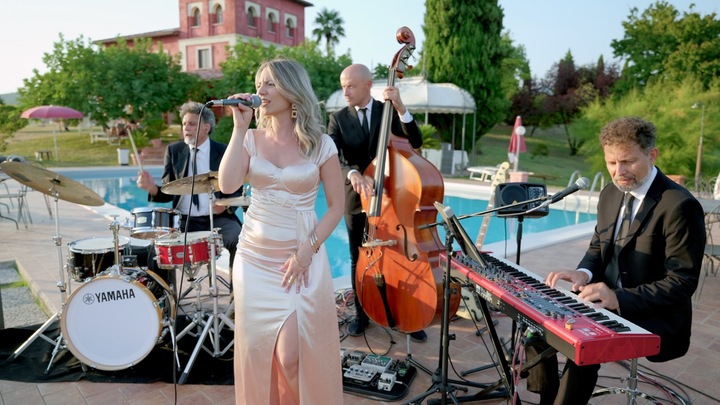
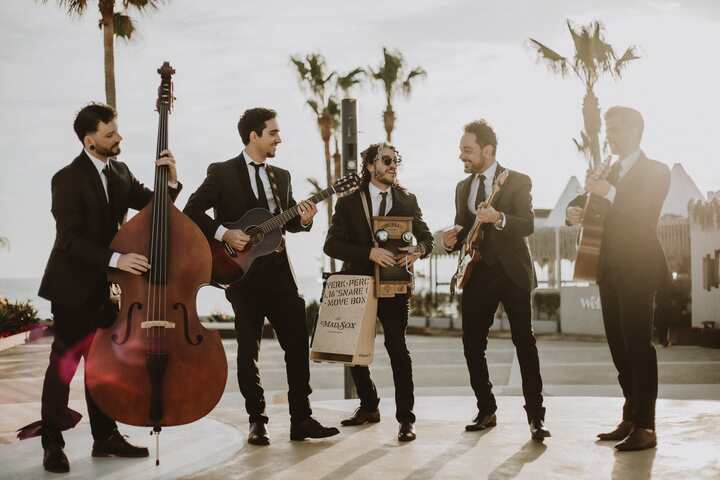
Wedding Bands in Sardinia

Live music for breathtaking Sardinian celebrations

1274 verified acts available in Sardinia

Why Sardinia Is an Extraordinary Wedding Destination

Sardinia is unlike anywhere else in Italy — or anywhere else on earth. The second-largest island in the Mediterranean offers a landscape of startling contrasts: emerald waters and white-sand beaches along the Costa Smeralda that rival the Caribbean, rugged granite mountains in the Gennargentu interior, ancient nuraghi stone towers that predate Rome by a thousand years, and wild, herb-scented countryside where sheep outnumber people. It is simultaneously one of Italy's most exclusive destinations and one of its most unspoiled.

For weddings, Sardinia delivers something that mainland Italian destinations struggle to match: genuine remoteness combined with luxury infrastructure. The Costa Smeralda, developed in the 1960s by the Aga Khan, established Sardinia as a playground for the global elite, and the island's northeastern coast now hosts some of Europe's most prestigious hotels and private estates. Yet travel just 30 minutes inland and you're in timeless hill towns where traditions stretching back millennia are still observed daily.

Sardinia's wedding season runs from May through October, with June and September offering the ideal combination of warm weather, manageable heat, and availability. July and August are peak tourist season — hotels and venues fill up fast, but the energy and long daylight hours (sunset after 9pm) make for spectacular celebrations. Around 3,000 destination weddings take place on the island annually, attracting couples from across Europe and beyond, drawn by the promise of turquoise seas, extraordinary food (Sardinian cuisine is a world unto itself), and a pace of life that slows time to something approaching perfection.

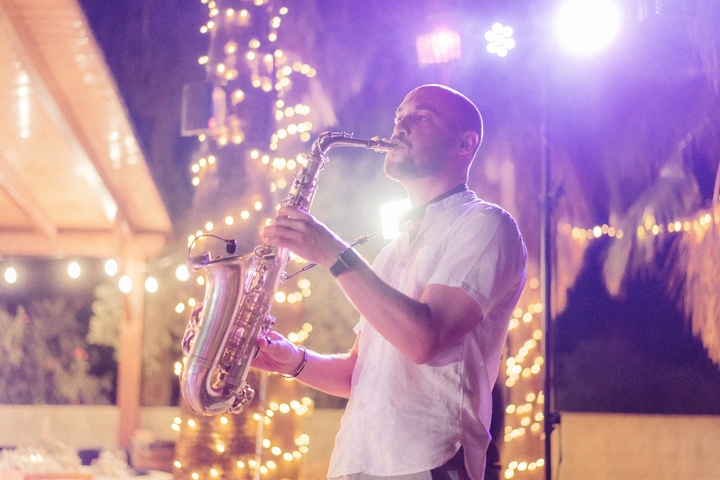
Live music transforms a Sardinian wedding from a beautiful holiday into a transcendent celebration. The island's natural acoustics — open skies, sea breezes, stone walls — create an environment where music sounds and feels different. A band playing on a terrace overlooking the Mediterranean at golden hour is an experience that stays with guests forever.

Popular Venues & Settings for Sardinian Weddings

Beach & Coastal Venues

Sardinia's coastline is its headline act. From the famous beaches of the Costa Smeralda — Porto Cervo, Romazzino, Cala di Volpe — to the less-discovered coves of the southwest coast near Chia and Villasimius, beachside weddings are the island's signature. Ceremonies on the sand at sunset, receptions on seaside terraces, and after-parties with waves lapping the shore are all possible.

Band considerations: Beach and coastal venues present unique challenges. Sand and salt air are enemies of electronic equipment — bands should use protective covers for amplifiers and mixing desks, and keep instruments off the sand where possible. Wind is the biggest variable: sea breezes pick up predictably in the late afternoon and can wreak havoc with microphone stands, sheet music, and lighter equipment. Bands need weighted stands, windscreens on all microphones, and a flexible setup that can adapt to changing conditions. Sound disperses quickly in open coastal settings, so a robust PA system is essential for groups larger than 50 guests. Despite the challenges, the acoustic experience of live music by the sea — the natural reverb of nearby cliffs, the rhythm of the waves — is incomparable.

Luxury Resort Hotels

The Costa Smeralda's legendary hotels — along with newer luxury properties in the Gallura region and along the southern coast — offer five-star wedding packages that include event coordination, catering, and dedicated event spaces. Resorts range from intimate boutique properties with 30-guest capacity to sprawling complexes that host celebrations of 300+.

Band considerations: Resort venues are generally the most band-friendly option in Sardinia. They offer reliable power, professional event coordination, covered performance areas, and staff who understand load-in logistics. Many have existing relationships with local production companies for staging and lighting. The trade-off: resorts often have stricter noise curfews (typically 11pm–midnight for outdoor music) and may limit band size or volume to protect other guests. Confirm these policies early and choose a band that can deliver impact within the constraints.

Historic Estates & Agriturismi

Sardinia's rural interior hides remarkable properties: medieval stazzi (traditional Gallura farmhouses), restored casali (country estates), and agriturismi set among cork oak forests, olive groves, and vineyards. Towns like Tempio Pausania, Oliena, and Arzachena offer estate venues with authentic Sardinian character, stone courtyards, and views stretching to the sea.

Band considerations: Rural Sardinian venues are often genuinely remote — single-track roads, no mobile signal, and limited electrical infrastructure. A site visit or detailed advance communication is essential. Power supply at historic properties may be single-phase and limited to 16A, far below what a full band requires. Generator hire is not optional — it's essential. Budget for a silent or low-noise generator to avoid a diesel rumble competing with the music. The compensating advantage is extraordinary: no neighbours for kilometres means virtually no noise restrictions. Bands can play at full volume until the early hours, and the stone courtyard acoustics of traditional Sardinian buildings create a natural amphitheatre effect.

Vineyard & Winery Venues

Sardinia's wine culture is experiencing a renaissance, with indigenous grapes like Cannonau, Vermentino, and Carignano producing wines that increasingly appear on international fine dining lists. Wineries in the Gallura region (northeast), the Sulcis area (southwest), and around Oristano offer wedding venues among the vines — barrel rooms, tasting halls, and vineyard terraces with views across the island's distinctive landscape.

Band considerations: Barrel rooms and wine cellars share the acoustic properties of their mainland counterparts — hard surfaces, echo, and cool temperatures. But Sardinian wineries often have the added advantage of spacious outdoor areas where the evening party can spill onto terraces among the vines. Plan for a split setup if possible: acoustic music in the barrel room for dinner, then a full band setup outdoors for dancing. Confirm whether the winery can provide a level, stable surface for the band — vineyard terrain is often uneven.

Private Villas & Villa Rentals

The villa rental market in Sardinia has boomed, with luxury properties across the Costa Smeralda, the Gallura coast, and southern Sardinia available for exclusive-use weddings. These range from modernist architect-designed homes with infinity pools to restored 18th-century country houses with their own chapels.

Band considerations: Private villas vary enormously in their suitability for live music. Key questions to ask: Is there a flat, shaded area large enough for a band and dance floor? What is the electrical supply? How far is the nearest neighbour (and what are the local noise ordinances)? Can a vehicle access the performance area for load-in, or will equipment need to be carried? The best villa wedding planners in Sardinia will have answers to all of these. For villas without adequate power, a 20kVA generator is standard for a full band setup.
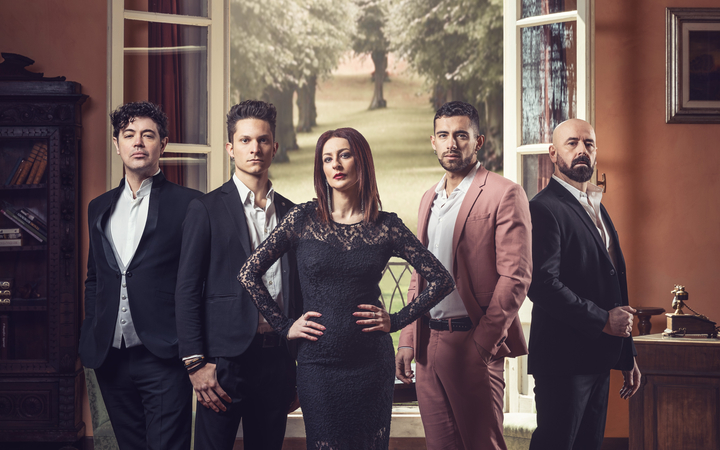
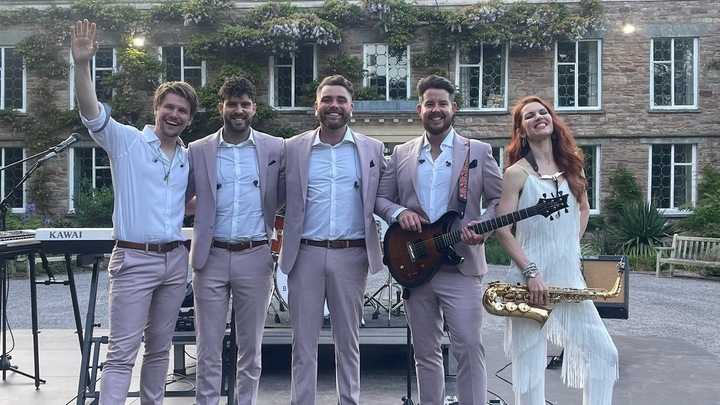
Read the full Sardinia wedding guide

Music & Entertainment for Sardinian Weddings

Sardinian weddings have a distinct character — warm, generous, family-centred, and often running very late into the night. The musical journey should reflect this:

  • Ceremony music: For beach ceremonies, a solo acoustic guitarist, a harpist, or a singer-guitarist duo provides the right intimacy. For church ceremonies in Sardinia's beautiful Romanesque churches (like the Basilica della Santissima Trinità di Saccargia or the churches of Castelsardo), acoustic instruments only — a string duo, organ, or solo vocalist. Sardinian churches are often small with extraordinary stone acoustics.

  • Aperitivo & cocktail hour: Sardinian aperitivo culture revolves around local delicacies — pane carasau, bottarga, pecorino, and Vermentino. The music should complement, not compete: a jazz duo, an acoustic trio playing Mediterranean-influenced repertoire, or even traditional Sardinian musicians (guitar and voice performing cantu a chiterra) for an authentic touch.

  • Dinner music: Sardinian wedding dinners are long, abundant affairs — often four or five courses plus dessert. Background music should be present but unobtrusive for the first courses, gradually building warmth as the wine flows and the atmosphere loosens. A vocalist with guitar, a piano-bar setup, or a small acoustic ensemble handles this beautifully.

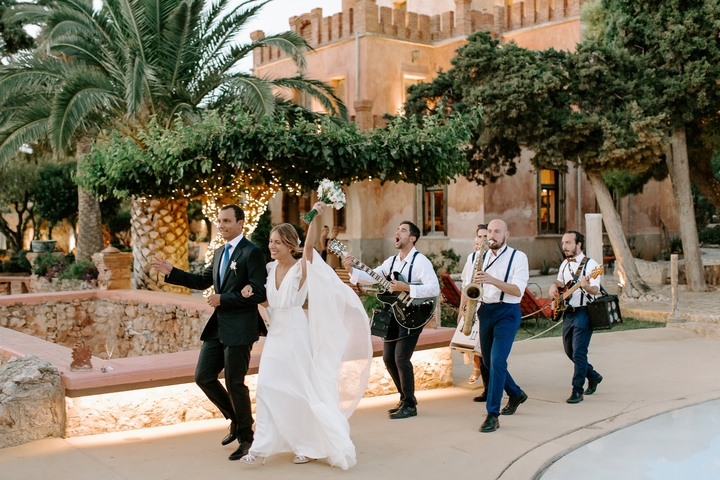
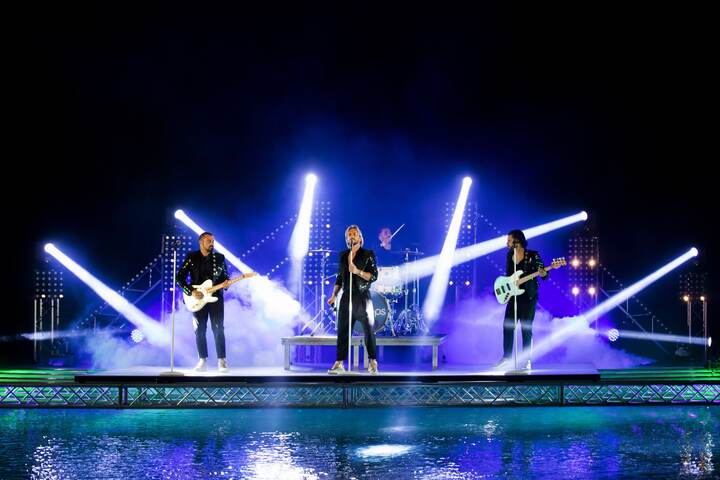
  • Party & dancing: When the tables are cleared, Sardinian weddings come alive. A full party band (4–7 musicians) capable of delivering international pop, dance, and funk alongside Italian classics is the standard. For luxury Costa Smeralda events, showbands of 8–12 musicians with brass sections, backing vocalists, and choreographed sets raise the bar further. The ballo sardo — Sardinia's traditional circle dance — may be requested at weddings with strong local connections.

  • Late-night & after-party: Sardinian weddings run late. A DJ set from midnight until 2am, 3am, or even dawn is not uncommon at private villas and rural estate venues. Many bands offer a seamless transition to a DJ set to carry the party through the small hours.

Logistics & Planning

Getting Your Band to Sardinia

Sardinia is an island, which adds a logistical layer that mainland Italian weddings don't face. The island has three airports: Olbia Costa Smeralda (OLB) in the northeast, serving the Costa Smeralda directly; Cagliari Elmas (CAG) in the south; and Alghero Fertilia (AHO) in the northwest. All three have domestic and seasonal European connections, with Olbia and Cagliari offering the most flights.

Most Italy-based wedding bands will fly to Sardinia from the mainland, shipping or checking essential equipment as luggage. Some bands drive — the car ferry from Civitavecchia (near Rome) to Olbia takes 5–8 hours, from Genoa to Porto Torres 10–12 hours, and from Livorno to Olbia 8–10 hours. Driving allows bands to bring their full equipment rig without cargo restrictions.

If hiring bands from Rome, Milan, or Naples, factor in ferry or flight costs plus at least one night's accommodation (two nights for bands travelling by ferry). Local Sardinian musicians and bands do exist — primarily based in Cagliari and Olbia — but the pool is smaller than on the mainland. For couples seeking specific genres or high-end showbands, mainland bands travelling to Sardinia are often the best option.

Setup & Equipment Considerations

  • Power: This is the single most critical logistical factor for Sardinian wedding music. Many of the island's most beautiful venues are remote and have limited electrical capacity. Always confirm available power and plan for a generator. A quiet 20kVA diesel generator costs €300–€600 to hire, including delivery and fuel.
  • Load-in: Sardinian venue access ranges from easy (resort hotel with goods entrance) to adventurous (single-track dirt road to hilltop estate). Provide bands with GPS coordinates, not just addresses — some rural Sardinian properties don't have street addresses. Photos and video of the load-in route are invaluable.
  • Stage & lighting: Few non-resort Sardinian venues provide stages. Portable staging (3m x 4m) can be hired from production companies in Cagliari or Olbia for €400–€800. Festoon lighting and uplighting transform outdoor spaces — budget €500–€1,500 for a professional lighting setup.
  • Sound curfew: In the Sardinian countryside, noise restrictions are effectively non-existent for remote properties. Coastal resort areas and towns have regulations, typically midnight for outdoor amplified music, though enforcement varies. Confirm with your specific venue.
  • Weather: Sardinia is one of Europe's sunniest regions, with rainfall rare from June through September. However, the maestrale — a strong northwesterly wind — can arrive without warning, particularly on the northern and western coasts. A wind contingency plan for outdoor setups is essential.

Typical Wedding Day Timeline

| Time | Activity | Music | |------|----------|-------| | 17:00 | Ceremony | Acoustic duo / guitarist | | 18:00 | Aperitivo | Jazz trio / Mediterranean duo | | 20:00 | Dinner | Background acoustic set | | 22:30 | First dance & party | Full band | | 00:30 | DJ set | Band DJ or dedicated DJ | | 03:00 | Music ends | — |

SIAE & Music Licensing in Sardinia

As across all of Italy, live music at Sardinian weddings requires a licence from SIAE (Società Italiana degli Autori ed Editori). The local SIAE offices in Cagliari and Sassari process wedding permits. The organiser (venue, planner, or couple) submits a borderò — a setlist declaration — before the event, and a fee is calculated based on guest numbers and event type. For a typical private wedding, expect a fee of €80 to €300.

The process is straightforward, but Sardinia's island logistics mean it's wise to handle the SIAE submission earlier than you might on the mainland — at least two weeks before the wedding. Most experienced wedding planners and Italian bands handle this as standard. If you're organising independently, the Cagliari SIAE office is generally responsive and accustomed to handling international enquiries.

Local Wedding Music Traditions in Sardinia

Sardinia has one of the richest and most ancient musical traditions in Europe — UNESCO has even recognised Sardinian canto a tenore (polyphonic singing from the island's interior) as an Intangible Cultural Heritage. Several musical traditions appear at Sardinian weddings:

  • Canto a tenore: This extraordinary four-voice polyphonic singing style, originating in the Barbagia region, involves a lead vocalist and three accompanying voices producing deep, guttural harmonics. At traditional Sardinian weddings, a tenore group may perform during dinner or at the aperitivo — it's an unforgettable, deeply moving experience that connects the celebration to the island's ancient roots.

  • Cantu a chiterra: The Sardinian guitar song tradition, particularly strong in the Gallura region (northeast Sardinia), features virtuosic guitar playing accompanying solo vocals. Love songs and celebratory ballads from this tradition appear naturally at weddings in the Gallura and Costa Smeralda areas.

  • Ballo sardo: Sardinia's traditional group dance, performed in a circle to the accompaniment of launeddas (triple-pipe reed instruments), accordion, or guitar. At weddings with Sardinian families, the ballo sardo is a moment of joyous communal celebration that brings all generations to the dance floor.

  • Launeddas: One of the oldest continuously played instruments in the Mediterranean, the launeddas produces a hypnotic, droning sound with complex melodies. A launeddas player during the aperitivo or ceremony adds a layer of ancient Sardinian authenticity that no other instrument can provide.

  • Serenata sarda: Similar to the mainland tradition, the Sardinian serenade involves the groom singing to the bride (with musical accompaniment) the night before the wedding. In Sardinian villages, this can turn into a community event with neighbours gathering to listen and celebrate.

Budget Guide for Wedding Bands in Sardinia

Sardinia's island logistics add a premium to entertainment costs, particularly for bands travelling from the mainland. Here's what to expect:

| Band Type | Typical Price Range | Notes | |-----------|-------------------|-------| | Solo musician (ceremony) | €400–€800 | Guitarist, harpist, or vocalist | | Duo (acoustic/jazz) | €1,200–€2,200 | Aperitivo and ceremony | | Trio or quartet | €2,000–€3,500 | Ceremony through dinner | | Full party band (4-6 pcs) | €3,500–€7,000 | Reception and dancing | | Premium showband (7+ pcs) | €7,000–€12,000+ | Full entertainment package | | DJ (standalone) | €800–€1,500 | Evening set | | Band + DJ package | €4,000–€8,000 | Most popular option | | Traditional Sardinian musicians | €500–€1,500 | Tenore group, launeddas, or cantu a chiterra |

Additional costs to budget for:

  • Band travel (flights/ferry + accommodation): €500–€1,500 for mainland bands
  • Generator hire: €300–€600 (essential for most non-resort venues)
  • Stage and lighting rental: €500–€2,000
  • SIAE licence fee: €80–€300
  • Equipment transport on island: €100–€300

Costa Smeralda weddings in July and August attract the highest prices, with premium showbands commanding rates 20–30% above the ranges listed. Booking 10–14 months in advance is essential for peak season, as both venue and entertainment availability on the island is more constrained than the mainland.

Frequently Asked Questions

Is it difficult to get a band to Sardinia?

It requires more planning than a mainland Italian wedding, but it's absolutely manageable. Most professional Italian wedding bands have experience performing on the island and have their travel logistics well rehearsed. Flights from Rome to Olbia take just one hour, and from Milan around 90 minutes. The key is to book early, confirm travel and accommodation arrangements well in advance, and ensure the band has detailed venue access information. Many couples simplify logistics by booking a band that includes all travel costs in a single package price.

Can we combine a mainland Italian band with traditional Sardinian musicians?

This is a wonderful approach and increasingly popular. Traditional Sardinian musicians perform during the aperitivo or dinner — a tenore group, a launeddas player, or a cantu a chiterra artist — while a full party band takes over for the dancing. The contrast between ancient tradition and contemporary celebration creates something truly memorable. Coordinate between the two groups to ensure smooth transitions and compatible equipment setups.

What happens if it's too windy for the band to play outdoors?

The maestrale wind is a real consideration, particularly on the north and west coasts. Every outdoor Sardinian wedding should have a Plan B — a covered terrace, indoor dining room, or marquee where the band can relocate. Professional bands carry weighted equipment stands and windscreens, but sustained winds above 30km/h make outdoor performance impractical for most setups. Discuss contingency plans with both your venue and your band well in advance.

How late can music go at a Sardinian wedding?

At remote rural venues and private villas with no close neighbours, music can continue until the early hours — 3am or even later. Coastal resort areas typically enforce curfews of midnight for outdoor amplified music. Town-centre venues follow municipal noise ordinances, usually ending at midnight. The general Sardinian attitude to celebrations is relaxed and generous, but it's essential to confirm your specific venue's policy. Many couples plan the band until midnight or 1am and continue with a DJ at reduced volume.

Is Sardinia a good option for a smaller, intimate wedding?

Sardinia is exceptional for intimate weddings. The island has dozens of boutique properties, small agriturismi, and private villas perfectly suited to celebrations of 20–60 guests. For smaller weddings, a trio or quartet can provide all the music you need — ceremony, dinner, and dancing — in a single, versatile ensemble. The intimacy of a small celebration at a Sardinian beach or hilltop estate, with live music echoing across the landscape, is genuinely magical.

Find Your Perfect Sardinian Wedding Band

Ready to find the ideal live band for your Sardinia wedding? Browse our curated selection of professional wedding bands experienced in performing on the island — from acoustic duos for beach ceremonies to full showbands for luxury Costa Smeralda celebrations.

Browse Wedding Bands →

Not sure what you need? Tell us about your wedding and we'll recommend bands suited to your venue, style, and budget.

Get a Free Quote →

Planning a Wedding in Sardinia?

Tell us about your wedding and we'll recommend the perfect live music for your Sardinia celebration.